“The Great Migration was
one of the largest movements of people in United States history. Approximately
six million Black people moved from the American South to Northern, Midwestern,
and Western states roughly from the 1910s until the 1970s. The driving force
behind the mass movement was to escape racial violence, pursue economic and
educational opportunities, and obtain freedom from the oppression of Jim Crow.”
The Chicago Defender, along
with other African American newspapers, posted encouraging articles, suggesting
better employment possibilities, social environment, and an optimistic
alternative to sharecropping, particularly in light of the cotton crop failures
due to the ‘boll weevil’ infestation.
Black media’s exposing of the South’s Jim Crow policies, the effects of World
War I, and World War II, helped drive the Great Migration to varying degrees.
Five individuals are
highlighted in this special ancestral search, during this commemoration of the
2022 African-American History Month Celebration as examples of ‘cornerstones’ in
a family, largely because of an event that is said to have been uniquely common
to an estimated six-million plus African-Americans, between 1910 to 1970. Each
of these five individuals with seemingly, different reasons for leaving the South,
nonetheless, their destinies are interrelated, catapulting these ancestors from
Louisiana, bound for an uncertain future in the Northern cities of Chicago and
New York and to the West in the Bay Area of California in the mid to late 1930’s
and 1940’s.
Wade
Based on all available
records, Wade Joseph Sorrell was the first of the family to leave the South. Twenty-one
years old, in 1930, he left Louisiana, along with his thirty-eight-year-old,
widowed mother, Nora Vance. In the 1930
U.S. Census, Wade Sorrell, a twenty-one-year-old, being documented as “head” of
the house, says to us, he was a ‘spirited,’ guy
for that time in history!
He
is the firstborn, and only son of Peter Wade Sorrell, born in 1910 in New
Orleans to the lovely Nora Vance (née Ogden).
Wade’s father, never married Nora, and it was well-known within his
family circles, that Wade wrestled with the ‘legitimacy’ issue for much of his
life. Nevertheless, Wade seemed to agree
with much of his father’s views of the importance in taking care of his family
and, as a result, enjoyed a mutually respectful relationship with his
father.
Wade,
my maternal grandmother’s (Theresa Sorrell) brother, had completed the highest
grade level of his day—eighth grade—which was equivalent to completing high
school. After all, New Orleans had only one four-year high school for black
students—McDonogh No. 35, granted approval in the fall of 1917, which remained
the lone four-year high school until 1942, when L. B. Landry was converted from
an elementary school along with the newly opened Booker T. Washington High
School (also made available to black students in 1942). The importance of
education for the Sorrell family is evident in Wade and his wife, Vera’s
children becoming successful, career educators.
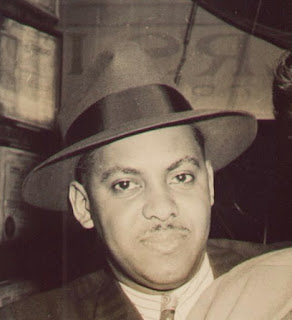
Wade
was a dapper, larger-than-life persona, standing six-foot, one inch tall, and
had ‘topped’ the best-dressed-men list in Chicago for more than ten consecutive
years before I graduated from high school in 1972. Wade had come to town—much like ‘Big Luke!’
My
mother, Dolores loved her family, as evidenced by the fact that her house was
the one place Wade, like many of the other ‘greats’ and ‘great-greats’ who came
to New Orleans (whether from Chicago, San Francisco, or New York), felt welcome
enough to visit and “rest a spell”. A place or places where family members can
come together from time-to-time, to simply stay connected to the central source
of energy, to recharge, commune, break bread, feel loved, be healed, heal
others, and then return to their respective homes, energized is vital to the
family. We had never had a family
reunion, prior to 2003, as far as I could remember, so those ‘visits’ from
Wade, served as informal, miniature reunion.
On
Friday, April 4th, 1930—some 56 years before he would give me his final
instruction, “I need you to keep track of the family”—Wade may have been awaiting
a telephone call at his (3913) Calumet Avenue address, as the following day
(Saturday), he indicated that he had not ‘worked’ the prior day, when Ms.
Bessie E. Morris, Enumerator for the Fifteenth Census of the United States in
Cook County, Ward 3 in Chicago, asked the specific question in accordance with
the form’s instructions. By April 1930,
Wade had already become a ‘skilled’ worker in the photography profession and
had earned the title of ‘finisher,’ usually performs any combination of drying,
trimming, and mounting photographic prints.
He knew the process of computing price of order, according to size and
number of prints.
But
that was the 1930’s—the time of the Great Depression, and since Prohibition
wasn’t repealed until 1933, young Wade’s mixology career was ‘put on hold’ on
hold for a few years!
In
the 3900 block of Calumet Avenue, just a bit over a mile west of Burnham Park,
was home to all black folks (negro), a significant percentage—more than 60% of
the seventy-eight residents listed in the 1930 U.S. Census, were born in the
Southern States of, Alabama, Louisiana and Mississippi. An additional 14% were born in Arkansas,
Georgia, North Carolina, and Tennessee. Of the more than three fourths
‘Southern born’ residents, many of them left the South between 1910 and 1940,
much like Wade Sorrell, were part of the First Great Migration of
African-Americans settling in major cities that included Philadelphia, New
York, Detroit, Cincinnati, Chicago, and Milwaukee.
By
1940, Wade is employed as a ‘bartender’ in a Chicago tavern, at 343 East 39th
Street, owned by Fred Mosley, a man in his mid-fifties, who also migrated from
Forest City, North Carolina a decade, or so earlier.
Wade
Joseph Sorrell did become the preeminent bartender
in the Bronzeville neighborhood of Chicago from around 1935 through the early
1970s, when he established his barbeque restaurant, “Sorrell’s Original Painted
Dall,” on South Halstead. The ‘Painted
Dall’ flourished in the community from the early 1970s through the mid-1980s,
when Wade’s declining health conditions forced the closure of the business
about two years prior to his death in 1987.
Deallean
Deallean Sorrell married
August Johnson on April 23, 1917 in New Orleans, (Orleans Parish) Louisiana. In the 1920 Census, Deallean, was living with
her husband, August (Augustus) J. Johnson along with their two-year-old
daughter, (Vivien) Victoria and their one-year-old son, Joseph, at: 511 Toulouse Street, in New Orleans, with August’s
mother, Victoria and her husband (August’s stepfather), Thomas S. Elliott (from
Jamaica—immigration in 1901).
Deallean was living in
Lutcher, Louisiana, renting a house without a radio or on Central Avenue, more
than fifty miles west of her siblings, Peter Sorrell, Dora Sorrell Johnson,
Bertha Sorrell Jackson by 1930. Her
children, Vivien and Joseph, ages 12 and 11, respectively, were not listed in
the census records with their mother in 1930.
Sometime, between 1935
and 1940, Deallean and two friends; ‘Tutts,’ ‘Joe’ and ‘Nanny’ left New Orleans,
where it was rumored, Deallean’s skills as a ‘businesswoman’ was put to the test.
Rumor or no, Deallean had found a ‘place that worked’ for her in New York!Deallean, unlike her
sisters Bertha (Bertha is pictured in a previous post—Tuesday, August 17, 2021 “Do
this as if it was ‘sacred’—It is!”) and Dora, did not wish to become skilled as
a domestic worker, a laundress, or a servant in Louisiana, nor did she frown
down on it for those who had chosen those labors as honest and plentiful during
her years as a young girl, and particularly, as a young woman, living in the South.
Deallean had learned to
cook all of the Creole recipes, skillfully enough to teach to her friend (Joe —
“the cook”), to be ‘in-charge’ of the kitchen on the main floor in their
brownstone in New York, where a person who knew them, could get a good meal, a
drink and whatever else…New York City had to offer during the 1940s and 1950s
by folks trying to make a better life after departing the South, where
opportunities for her siblings looked pretty bleak.
Both of Deallean’s
children, Vivien and Joseph were educated in New York and had landed noteworthy
careers in the dry goods business and law enforcement, respectively. Further, Deallean’s grandchildren and great
grandchildren were able to capitalize on the upward mobility resulting from the
opportunities presented in the North between 1935 and 1970, which may not likely
have materialized had she remained in the South.
Deallean with Joi
(great-granddaughter) travelling in the late 1960s.
Samuel (Jimmy)
Born February 9th,
1903, somewhere in Pointe Coupee, Louisiana, although, no definitive records
have been located verifying records.
There are no census
records, vital records…
Jimmy, the youngest of
Peter Sorrell’s siblings, was living ‘off the grid!’
He could speak Louisiana
Creole and understood the French language, fairly well. It was generally thought, that Samuel James
Pourciau, this arcane gentleman from the shadows of ‘False River,’ shared a
different father with Deallean, but not with any other of the Sorrell
siblings. Nevertheless, no one is around
to confirm any of these details.
Which brings us to the
essence of Samuel James Pourciau.
Whatever he was, he deliberately designed other’s perception as to who
he was. Jimmy also was a perfect model
of ‘Big Luke!’ No one could determine
when or where he came from, nor could say for sure what he did…
My
youngest brother, Prentiss remembers “Uncle Jimmy brought candy from his job around
Christmas one year (1964), when he came to visit us in New Orleans!” Yeah, I said, supposedly, he was employed in
a candy factory, so as young kids, getting those huge, clear plastic
containers, fashioned in the shape of a cane, filled with cellophane-wrapped
peppermints, strawberry bon-bons, butterscotch and cinnamon-flavored candies,
made for one incredible visit for Dolores’ kids!
Uncle Jimmy (and Aunt Dee)
were ‘jet setters!’
This photograph was taken at the New Orleans International Airport in
the early 1960s. The United Airlines ticket
counter can be seen in the background.
Jimmy enjoyed a drink or
two (or three), for as long as I can
remember—usually on weekends, particularly bourbon, but
if all you had was scotch, he was grateful
to have that as well. His second choice of
libation, a bottled beer, which he preferred with his
breakfast. Mind you now, my uncle was
not an alcoholic, nor was he a ‘lush.’
The one and only time, I
personally witnessed him (personally) ‘tipsy,’ was in the late summer of 1975,
when he had come to visit the family for a few days. My buddies had pitched in to have a seafood
boil at our home to celebrate having my uncle in town and the wedding engagement of
Janice and me (We were married the following summer).
My friend Terry, baited him with a
taste of ‘Brass Monkey,’ but, the real curiosity was in the yellow-orange colored,
glass of ‘Tequila Sunrise’ that mesmerized uncle Jimmy that day. About two hours later, he announced, “I’m
goin’ in and take a nap! ‘to kill ya’ ain’t somethin’ I need to be foolin’
with! Who in the hell came up with a
liquor named ‘to kill ya,’ anyway?
Samuel was known in
Louisiana as ‘passé blanc’ (pass for White) by his close family members, and in particular his
elder brother, Peter Sorrell, who apparently was ‘made aware’ that Jimmy was
‘in trouble.’ The word on the streets was that some folks Jimmy had gambled
with (amongst other things), was ‘on to him’ and were ‘looking for him.’ Somewhere before 1940, Jimmy was sent ‘elsewhere’ on a
train by Peter Sorrell to avoid trouble from the ‘folks looking for him.’ Uncle
Jimmy confessed “Pete asked Wade to look out for me for a while.”
Wade is
Jimmy’s younger nephew (and Peter’s son), seven years his younger.
Jimmy married Sadie Mason King in 1945 and they were inseparable, living together in Chicago, until round 1965 when she succumbed to cancer. The loss of Aunt Sadie was the single most devastating Jimmy had experienced—“man, loneliness is horrible!”
Uncle Jimmy came to
Denver in 1976, blessed our marriage, take us to meet his wife’s family and later, brought us to (and educated us on) one of the most unforgettable New Year’s Eve
celebrations in Five-Points in Denver—The Harlem of the West!
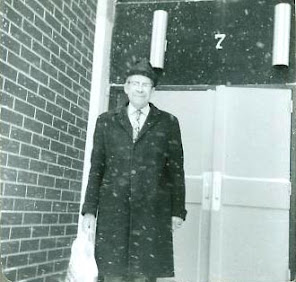
This photo was taken with my Yashica D camera in front of Pine Creek Apartments, 600 South Dayton St. in Denver,
Colorado, Building 7. Uncle Jimmy
‘arrived’ the last week of 1979—just before New Year’s Eve!
It was snowing heavy in Denver in December 1976, and Samuel J. Pourciau arrived in a taxi, the driver blowing his horn! I grabbed my Yashica D and ran down the stairs and took this photo. Sheer instinct told me; nobody would believe this story! This is ‘in the moment.’ But that was classic Uncle Jimmy!
When Samuel James Pourciau died, the day
before Christmas Eve 1979, My closest family member to fill the
role of a father, at a time I needed it most, was no longer
here.
It was an honor to know
my great-grandfathers’ younger brother, to have loved him and have him love
us. He was the least wealthy of all of
the ancestors introduced in this story, in terms of worldly possessions, yet he
was the most loved individual to all of the family who knew him, making him a
rich man by most other standards.
Leaving the South, proved to have been a ‘grand idea,’ for my Uncle Jimmy!
Ethel
Ethel Sorrell, born in New Orleans, Louisiana in 1913,
the youngest of Peter Sorrell’s
children, graduated from high school in New
Orleans, attended LSU, then left Louisiana around 1942, and married shortly
after arriving in Oakland, California, to a young, Douglas Wilson, a ‘Pullman
Porter’ from Oklahoma.In 1945, Ethel was employed by The United States Naval
Supply Command and in 1954, married Charles Fluker and moved to Richmond,
California, where she was active member at Easter Hill United Methodist, a
life-member of the Richmond NAACP, and a charter member of the Zeta Amecae
Auxiliary.
Ethel Sorrell is Madison Gunter Jr’s aunt and was
likely considered a potential ‘back-up plan’ by his mother, in the event his
father, now living a bachelor’s lifestyle and playing (amateur) golf locally,
was unwilling to ‘take in’ his son, a pre-high school teen.
Ethel Mae Sorrell ceased being a maid, largely due to
better employment opportunities in the West, compared to what was available to African
Americans in Louisiana in then 1940s.
Her education proved to be advantageous and Ethel was an important
example to others in the family. She
inspired us all to strive for better possibilities, using education and
exceptional work ethics as the best ‘leverage’ tools available.The Great Migration allowed for Ethel M. Sorrell
Fluker to have a pretty nice life, in my opinion.
Madison (Jr.)
Madison Herman Gunter, Jr., son of Madison Herman
Gunter and Theresa Sorrell, born in 1935 in New Orleans, Louisiana, went to
live with Aunt Dee (Deallean) in New York one summer, around 1947, where he
likely met his cousin, less than a year younger, Earle Thompson—'The Duke of
Earl,’ undoubtedly leaving a positive impression on Madison. It is likely, Earle’s mother and Madison’s
mother had lengthy discussions about getting young Madison out of New Orleans
too.Madison’s father (referred to as ‘Gunter’) had met his
mother, Theresa, while they were both employed at The Snow-White Laundry on
North Dorgenois Street, a few blocks northwest of the Tremé. Apparently, Gunter’s mother, Susie (Doc)
Fuller, also employed at the Snow-White, introduced the couple, they dated and
shortly afterwards, had their son Madison, Jr.
Around 1940, Gunter left New Orleans for San
Francisco, with high hopes of playing professional golf. In
1948, Ted “Rhodes made the cut at the Los Angeles Open to continue on to the
Richmond (California) Open. When he
showed up, along with fellow black golfers Bill Spiller and Madison Gunter,
(yes, our ‘Gunter’) they were denied access because they were black. The three golfers sued the PGA for $315,000, saying
that their livelihood was being deprived by the PGA based on race. The PGA promised to invite black players to
their top tournaments, so the lawsuit was dropped.” It was perceived that Gunter was doing ‘well’
in the Bay Area, so Theresa (Madison Jr’s mother) ‘sent’ their son to live with
his father. It is doubtful Gunter ever
realized the significance in his timely departure from the South, or the role
he played in his son’s future and his impact on the Sorrell family’s future.
By 1949 Madison Herman Gunter, Jr. was in San
Francisco going to George Washington High School and caddying for his father,
Madison Gunter, Sr.
After enlisting in the Army in 1953, playing baseball
for the ASCOM until the end of the
1950s, when he returned to San Francisco and
was employed by the San Francisco cable car system through the mid-1970s.
Madison met and began dating Jeanette Fair when he was
working for the San Francisco Cable System.
Jeanette was born in Los Angeles in 1929, to J.
B. Fair and Katie Lee Maney, both born in Texas, migrating to California in the
1920s. Jeanette (their only child), and Madison Jr, married around 1966 and became
one of the last of the Sorrell descendants who make up the more than 18% of
African Americans in California’s Bay Area were from Louisiana.”Uncle Madison’s departure from New Orleans, in the
1940s is still proving a tremendous decision for his entire family, including
his sister’s ‘middle child!’ (Byron Marcellɵ Coleman)